
Starting the BigPicture blog series: Medication in older adults: what nursing students must know
From lectures to real-world care – explore the BigPicture blog series
What happens when expert knowledge meets real-world nursing practice—and how can we learn to apply comprehensive geriatric assessment in everyday care?
In the EU-funded BigPicture project, we are transforming key topics from our lectures into an engaging blog series developed in collaboration with international partners. The series brings together essential insights on comprehensive geriatric assessment, patient safety, and care for older adults—and turns them into practical, accessible guidance for students and professionals.
Each article is designed for a specific audience and aims to support one key skill: understanding how to assess the whole older person. In other words, the goal is to learn to see the older patient as a whole and to apply comprehensive geriatric assessment in everyday nursing practice.
The first article in the series is targeted at nursing students and focuses on medication safety in older adults, highlighting how to recognize risks, think critically, and support safe decision-making in care. It also emphasises the importance of seeing the bigger picture and developing a holistic understanding already during the studies.
Read the first article:
Medication in older adults: what nursing students must know
Summary
Safe medication use in older adults requires understanding risks, practical skills, and continuous assessment in nursing practice.
Authors:
Susanna Mört and Sini Eloranta, Principal Lecturers, Turku University of Applied Sciences
Based on original lecture content by Terhi Kilpinen, RN.
Why medication in older adults requires special attention
Medication is one of the most common interventions in the care of older adults—but also one of the most complex. As people age, their bodies respond differently to medicines, which increases the risk of side effects and unexpected outcomes. At the same time, many older individuals use multiple medications, making management even more challenging.
“An older patient becomes suddenly confused after a routine medication change—what happened?”
For nursing students, this is a crucial area of competence. Nurses are responsible not only for administering medication but also for observing its effects, identifying risks, and ensuring safe and effective use. Developing these skills early helps improve patient safety and the quality of care.
What you need to understand about medication in older adults
Caring for older adults requires an understanding that medication effects are not always predictable. Ageing influences how medicines work in the body, meaning that treatments that once worked well may no longer be suitable, and long-term medications may start causing new adverse effects.
A key challenge is polypharmacy, typically defined as the use of multiple medications at the same time. However, it is important to recognize that this does not only include prescribed drugs. Over-the-counter medicines, herbal remedies, and supplements all contribute to the overall medication burden.
“A vitamin or herbal supplement may seem harmless—but in older adults, it can interact with prescribed medication and affect patient safety.”
Polypharmacy is not only about numbers but about appropriateness. Patients may sometimes receive unnecessary or overlapping treatments, especially when multiple professionals are involved. This increases the risk of adverse drug events, which are a significant cause of hospitalisation in older adults.
Another important concept is the prescribing cascade. This occurs when a side effect of a medication is misinterpreted as a new condition, leading to the prescription of an additional drug. Over time, this can significantly increase treatment complexity and risk.
What you can apply in practice right away
As a nursing student, there are several practical approaches you can start using immediately.
First, always look beyond the medication chart. Ensure that the medication list includes everything the patient uses—including over-the-counter products and supplements. Without this, it is not possible to fully understand the patient’s situation.
Second, focus on observation. Many medication-related problems in older adults present as symptoms such as dizziness, confusion, weakness, or falls. These symptoms should not automatically be interpreted as normal ageing but as possible adverse effects requiring further assessment.
“Medication-related symptoms are often mistaken for normal ageing.”
Third, think critically about changes. When new symptoms appear, consider whether they might be linked to existing medication rather than a new illness. This is essential in preventing cascades prescribing.
Fourth, take an active role within the care team. Nurses are in a key position to monitor medication effects, identify risks, and communicate their observations. This includes recognising adverse drug events, supporting medication reviews, and educating patients about their medications.
Finally, remember that medication is not always the only solution. In some situations, non-pharmacological approaches can reduce the need for medication and help prevent unnecessary treatment burden.
How this shapes your future nursing practice
Medication safety in older adults requires more than technical accuracy. It requires critical thinking, continuous assessment, and a holistic understanding of the patient.
As you gain experience, you will learn to recognize patterns, question assumptions, and connect symptoms with possible medication-related causes. These skills are essential in preventing harm, improving patient outcomes, and supporting safe, high-quality care.
“An older patient becoming suddenly confused after a medication change is rarely a coincidence—it is often a sign of an adverse effect, an interaction, or even a prescribing cascade.”
Keywords:
CGA, medication, older adults, nursing education, patient safety, polypharmacy, ageing
Funded by the European Union. Views and opinions expressed are however those of the author(s) only and do not necessarily reflect those of the European Union or EACEA.
References:
American Geriatrics Society. (2023). A pocket guide to 2023 BEER’s criteria. https://geriatricscareonline.org/ProductAbstract/ags-2023-beers-criteria-pocket-card/CL018/
Fimea – The Finnish Medicines Agency. (2025). Medication therapy indicators. Retrieved April 2025, from https://www.fimea.fi/web/en/databases_and_registeries/medication_therapy_indicators
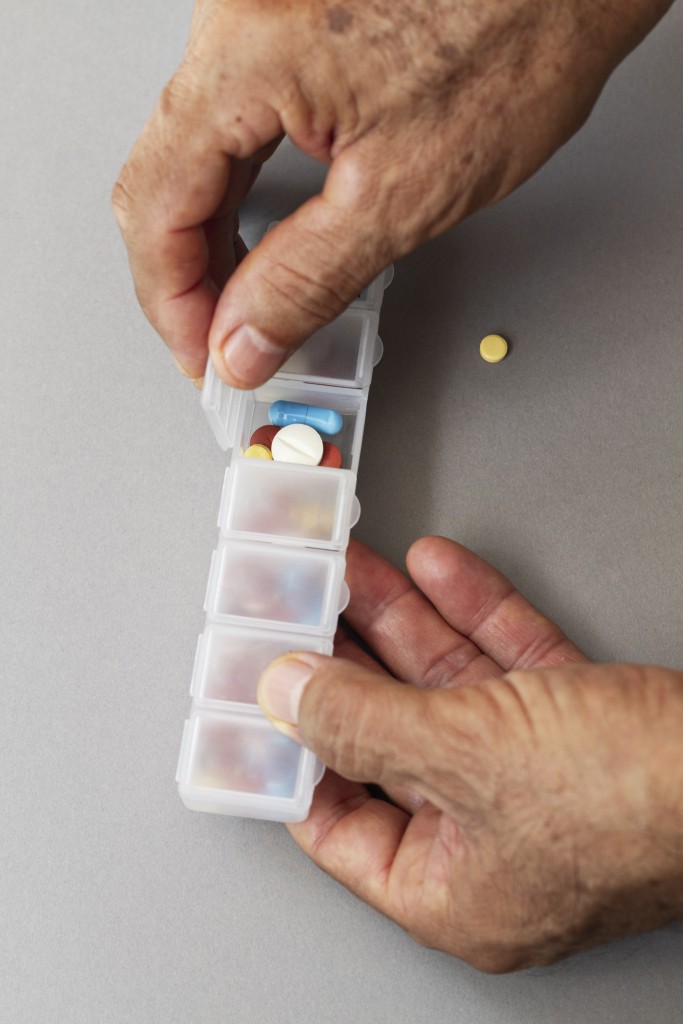
Image source: Medication-1463470133k0e.jpg. (n.d.). Creative Commons. medication-1463470133k0e.jpg (1920×1280)

Jennings, E. L. M., Murphy, K. D., Gallagher, P., & O’Mahony, D. (2020). In-hospital adverse drug reactions in older adults: Prevalence, presentation and associated drugs—a systematic review and meta-analysis. Age and Ageing, 49(6), 948–958. https://doi.org/10.1093/ageing/afaa188
Kim, J., & Parrish, A. (2021). Nursing: Polypharmacy and medication management in older adults. Clinics in Integrated Care, 8. https://doi.org/10.1016/j.cic.2021.100073
Kim, L., Koncilja, K., & Nielsen, C. (2018). Medication management in older adults. Cleveland Clinic Journal of Medicine, 85(2), 129–135. https://doi.org/10.3949/ccjm.85a.16109
Kim, S., Lee, H., Park, J., Kang, J., Rahmati, M., Rhee, S.-Y., & Yon, D.-K. (2024). Global and regional prevalence of polypharmacy and related factors, 1997–2022: An umbrella review. Archives of Gerontology and Geriatrics, 124, 105465. https://doi.org/10.1016/j.archger.2024.105465
Laatikainen, O., Sneck, S., Bloigu, R., Lahtinen, M., Lauri, T., & Turpeinen, M. (2016). Hospitalizations due to adverse drug events in the elderly – A retrospective register study. Frontiers in Pharmacology, 7, 358. https://doi.org/10.3389/fphar.2016.00358
O’Mahony, D., Cherubini, A., Renom Guiteras, A., Denkinger, M., Beuscart, J.-B., Onder, G., Gudmundsson, A., Cruz Jentoft, J., Knol, W., Bahat, G., van der Velde, N., Petrovic, M., & Curtin, D. (2023). STOPP/START criteria for potentially inappropriate prescribing in older people: Version 3. European Geriatric Medicine. https://doi.org/10.1007/s41999-023-00783-5
Parker, K., Bull-Engelstad, I., Benth, J. Š., Aasebø, W., von der Lippe, N., Reier-Nilsen, M., Ingrid, O., & Stavem, K. (2019). Effectiveness of using STOPP/START criteria to identify potentially inappropriate medication in people aged ≥ 65 years with chronic kidney disease: A randomized clinical trial. European Journal of Clinical Pharmacology, 75(11), 1503–1511. https://doi.org/10.1007/s00228-019-02727-9
World Health Organization. (2017). Medication without harm: Global patient safety challenge on medication safety. World Health Organization. https://apps.who.int/iris/handle/10665/255263
World Health Organization. (2019). Medication safety in polypharmacy: Technical report. https://apps.who.int/iris/handle/10665/325454