Comprehensive Geriatric Assessment for Older People Is Strengthened Through the Integration of Theory and Practice
Comprehensive Geriatric Assessment for Older People Is Strengthened Through the Integration of Theory and Practice
“The key is not only to assess, but to interpret the findings and use them to care and multidisciplinary collaboration.”
The Comprehensive Geriatric Assessment Skills Education Programme for Nurses – Can You See the Big Picture? project developed an 8-ECTS course on comprehensive geriatric assessment for nurses. The course was piloted for the first time in spring 2026 in five European countries participating in the project. International implementation enabled the evaluation of the educational model, learning materials, and pedagogical approaches in different educational and practice settings. The course materials were provided in English, while teaching was delivered in the local language of each participating country. A total of 97 students participated in the pilot.
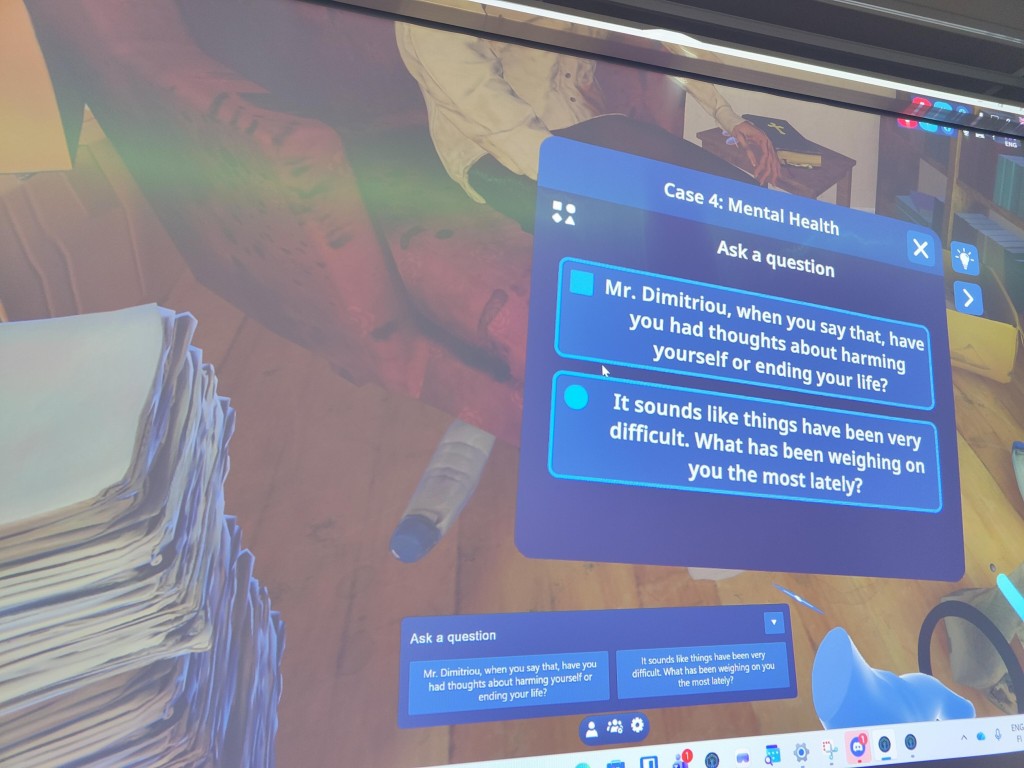
The course combines independent online study (3 ECTS), digital learning games (3 ECTS), and work-based clinical training (2 ECTS), during which comprehensive geriatric assessment is applied in real-life patient situations. In Finland, the pilot was implemented by Turku University of Applied Sciences, and most of the nurses were from the Wellbeing Services County of Southwest Finland.
The course strengthened holistic thinking
Feedback from the Finnish nurses who participated in the first pilot was positive. The course was described as rewarding and educational, and the learning environment was perceived as relaxed and supportive. Participants reported gaining new knowledge and practical tools that they could apply in their own work.
The course helped participants develop a better understanding of what comprehensive geriatric assessment entails. This is one of the aims of the course, as it is designed to provide foundational-level studies in comprehensive geriatric assessment.
A key finding from the educational pilot was that conducting individual assessments of an older person’s health or functional ability is not sufficient to carry out a comprehensive geriatric assessment or to form an overall picture of their situation. Participants were able to describe the older person’s life situation and functional ability and to use various assessment tools. However, in some of the assignments, integrating and interpreting the assessment results and drawing well-founded nursing conclusions based on them proved more challenging.
For nurses, comprehensive geriatric assessment requires the ability to broaden their perspective, integrate different observations, and use them to form an overall picture of an older person’s situation. This also requires taking the time to pause and carefully consider everyone’s situation. Assessment tools support nurses’ decision-making, but what matters most is what happens after the assessment.
In comprehensive geriatric assessment, it is essential not only to collect information but also to integrate and interpret it. Nurses need to identify connections between different findings, assess the older person’s risks and strengths, and form an overall picture of their situation. Based on this assessment, appropriate nursing interventions, further examinations, consultations, and multidisciplinary follow-up can be planned.
Feedback guides further development of the programme
The first pilot provided valuable information about both the strengths of the course and areas for further development. The course helped participants gain a better understanding of comprehensive geriatric assessment and provided new tools for clinical practice.
Importantly, many nurses with long experience in geriatric assessment felt that the course gave a name and structure to their existing competence, even though they had not previously received specific education in geriatric assessment. At the same time, the pilot identified areas where greater clarity and guidance are still needed.
Based on the feedback received, the course’s learning outcomes, assessment criteria, and the process of comprehensive geriatric assessment will be described more clearly.
Guidance for case-based assignments will also be strengthened to help participating nurses move more effectively from describing the older person’s situation to integrating findings, drawing conclusions, and planning evidence-based follow-up actions.
The digital learning games will also be further developed based on the feedback received. Participants requested more activities that allow them to test their knowledge and actively make decisions. The aim is for the games to challenge learners to apply their knowledge, compare different options, and justify their decisions.
The programme content, assignments, guidance, and learning methods were refined before the second pilot round, which began in autumn 2026. The second pilot round is also being implemented in the other project countries.
In the Big Picture project, piloting is seen as a continuous process of learning and development. Experiences and feedback from the different project countries will be brought together to further develop the programme into a pedagogically effective learning experience that can be adapted to different educational and clinical settings.
The aim is to strengthen nurses’ ability to identify the individual needs of older people, form a comprehensive picture of their situation, and make well-founded clinical decisions.
Are you interested in taking the course at your university or higher education institution?
Find out more here: https://bigpicture.turkuamk.fi/online-course/
Authors
Sini Eloranta, Turku University of Applied Science
Satu Huusko, Turku University of Applied Science
Heli-Maria Huusko, Wellbeing Services County of Southwest Finland
Hannele Tuori, Wellbeing Services County of Southwest Finland
Nina Korsström, Turku University of Applied Science
Susanna Mört, Turku University of Applied Science